For generations, a banking job has been one of the most respected and secure careers in India. Every year, millions of young graduates prepare for bank exams, hoping for stability, good pay, and social status. But in recent years, a new question has started worrying many: Will artificial intelligence replace banking and clerical jobs in India by 2035?
With digital banking, chatbots, and AI-powered apps becoming part of daily life, many fear that automation could make traditional banking roles unnecessary. Let’s look at what’s really happening in India’s banking sector, how automation is changing jobs, and what you can do to stay future-proof.
How AI Is Changing the Banking Sector in India
Watch this video for a nuanced view of how AI is reshaping Indian banking.
Artificial Intelligence (AI) is not science fiction anymore. It is already deeply involved in the Indian financial system. Most major banks have adopted AI in some form to improve efficiency, security, and customer experience.
Here are some key areas where AI is transforming Indian banking:
- Customer Support and Chatbots
Banks like HDFC Bank, ICICI Bank, and SBI use AI chatbots such as Eva and SBI Intelligent Assistant to answer customer queries instantly. These bots can handle thousands of questions every day, reducing the workload of human staff. - Fraud Detection and Risk Analysis
AI systems continuously monitor transactions to detect unusual activity. This has made fraud detection faster and more accurate than ever before. - Loan and Credit Processing
Algorithms now analyze documents and credit histories in seconds. What once took a clerk or loan officer several days can now be done in minutes. - KYC and Document Verification
Automated systems read, verify, and store customer documents using OCR and machine learning. This reduces manual paperwork and human error. - Predictive Analytics
AI tools help banks predict customer needs, create personalized offers, and make smarter lending decisions.
These technologies are not only saving time but also helping banks cut costs and serve customers 24/7. However, they are also slowly changing the type of work that humans do inside banks.
Which Banking Tasks Are Most at Risk?
Not every banking role is equally vulnerable to AI. Jobs that involve routine and repetitive tasks are at the highest risk of automation.
High-Risk Tasks
- Data entry and back-office form processing
- Manual document verification
- Cash handling and cheque processing
- Routine customer inquiries (handled by chatbots)
Moderate-Risk Tasks
- Loan processing and credit approval (AI assists but final approval by humans)
- Compliance checking
- Basic data analysis and reporting
Low-Risk Tasks
- Customer relationship management
- Financial advisory and investment planning
- Branch management and decision-making
- Business development and cross-selling
In short, AI will replace repetitive tasks, not human judgment. The more your work involves decision-making, communication, and trust-building, the safer your job is.
Impact on Clerical and Administrative Jobs
Bank clerks and office administrators are among the most affected by automation. In both government and private banks, many traditional clerical functions such as entering transaction details or updating records are now automated.
Across offices and government departments, clerical roles are also changing. AI-based tools handle file tracking, payroll processing, and scheduling. While this reduces human workload, it also means fewer new clerical positions are being created.
Still, human supervision remains essential. Machines can process information, but they can’t understand customer emotions, build relationships, or make ethical decisions in complex situations. These skills remain valuable.
The Indian Context: Why Full Replacement Is Unlikely
It’s important to remember that India’s banking system is unique. While digital adoption is growing fast, millions of customers, especially in semi-urban and rural areas, still depend on human bankers for trust and guidance.
Here’s why full automation is unlikely in India by 2035:
- Human trust is still central to banking. Many customers prefer to discuss their financial matters face-to-face, especially in government banks.
- Language and literacy barriers. India has dozens of languages and varied literacy levels. AI systems can’t yet handle these human nuances effectively.
- Regulatory and compliance complexity. RBI guidelines and government rules often require manual verification and signatures.
- Job security policies in public banks. Government banks have strong employee protection frameworks, which means automation will come gradually.
So, while private banks may adopt AI faster, public sector banking jobs will continue to exist, though they’ll evolve with time.
Safe and Growing Roles in Banking
Automation doesn’t mean the end of opportunities. It means that job roles are shifting toward technology, data, and relationship-based functions.
Here are some AI-proof roles expected to grow in the next decade:
- Financial Data Analysts – interpreting trends and customer behavior
- Cybersecurity Experts – protecting sensitive banking data
- Relationship Managers – maintaining long-term client trust
- Fintech Coordinators – working between technology and finance
- Compliance and Risk Officers – ensuring AI systems follow regulations
If you’re already working in banking, upgrading your digital and analytical skills will keep you ahead of automation.
How to Future-Proof Your Banking Career
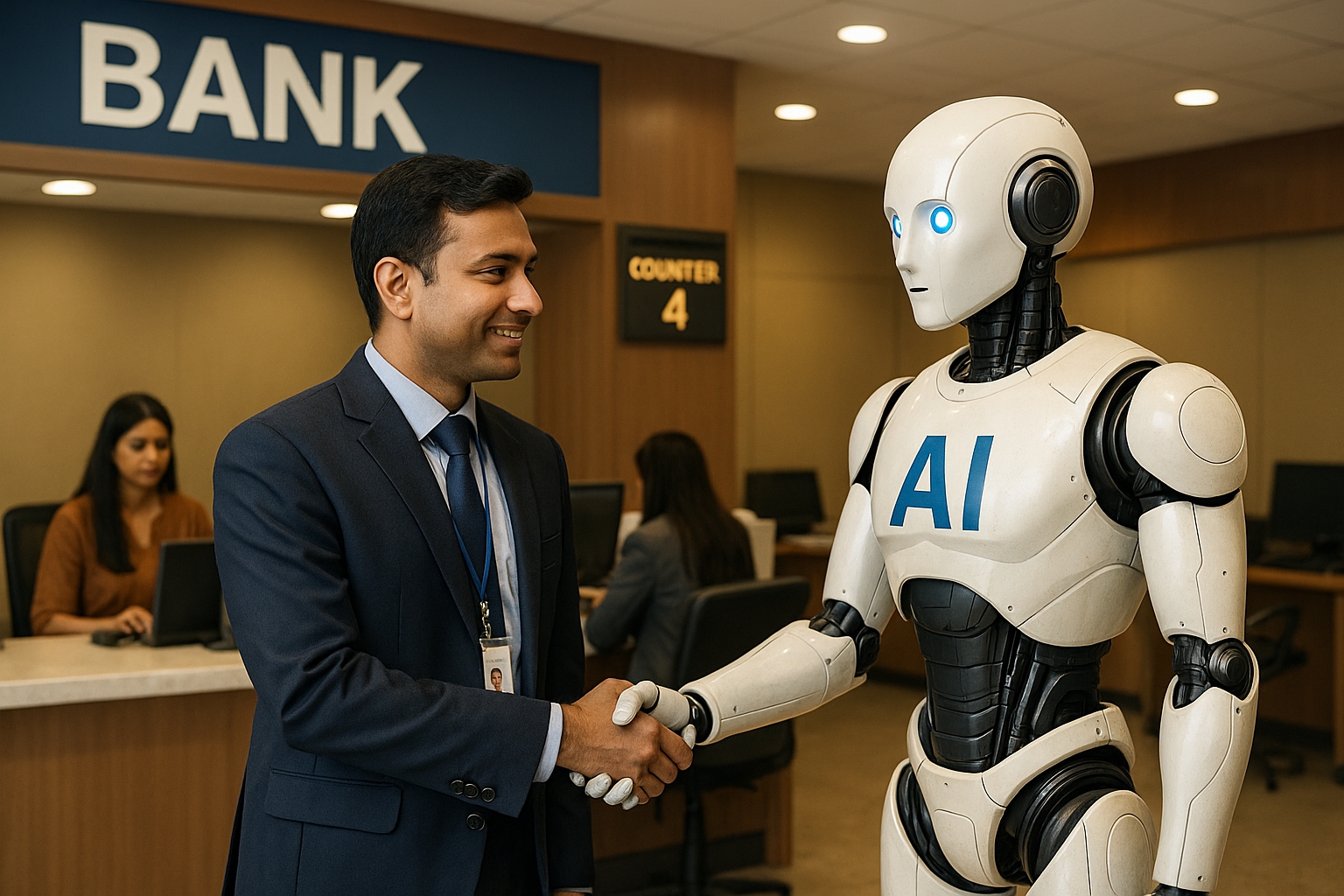
To stay relevant in the age of AI, focus on upskilling and adaptability. Here are practical steps you can take:
- Learn data skills.
Basic Excel automation, data visualization, and report generation are in high demand. - Understand AI and digital banking tools.
Familiarize yourself with CRM systems, digital payment platforms, and automation tools used in banks. - Improve communication and relationship skills.
Machines can’t replace empathy or trust-building — two qualities customers value most. - Take short courses on fintech or banking analytics.
Many platforms offer beginner-friendly certifications that add credibility. - Stay updated with RBI and industry trends.
Knowing how policies and technologies are evolving helps you adapt faster.
Tip: If you’re unsure how risky your job is, try the AI Job Risk Calculator to see your AI risk percentage and get career advice instantly.
Expert Predictions on Banking Automation
Industry experts believe AI will change the structure of banking, not eliminate it. According to PwC India, around 30–40% of routine financial tasks could be automated by 2035. However, demand for professionals who understand both finance and technology is expected to grow rapidly.
The Reserve Bank of India has also encouraged “augmented intelligence,” meaning AI will support human bankers, not replace them. This balanced approach will help India modernize without causing massive job losses.
Conclusion
AI is transforming banking and clerical jobs in India faster than ever, but the fear of complete job loss is exaggerated. Yes, certain repetitive roles will shrink, but new tech-enabled roles will take their place.
The key to survival is adaptation. Bankers and clerks who learn to work with AI tools will continue to have strong careers in the coming decade. Those who resist change may struggle to keep up.
By 2035, the Indian banking sector will be more digital, data-driven, and customer-focused. Humans and AI will work side by side to create faster, safer, and smarter financial systems.
If you’re in banking today, the best time to start learning digital and analytical skills is now. The future belongs to those who evolve.
Reference:
More from AIJobRisk:
- Related reading: Will AI Replace Data Entry Jobs? Future Outlook 2025–2035
- Looking for safe careers? Read Top Future-Proof Careers for Non-Coders (2025–2035)